Character
Aroma, flavor, sweetness, and texture all contribute to how a coffee is experienced. Tasting notes describe impressions, not necessarily added ingredients.
Discover Colombian coffee through the people who grow it. Imported by Dorjes Coffee Imports, with La Bretaña’s family tradition at its heart.
Discover La Bretaña ↓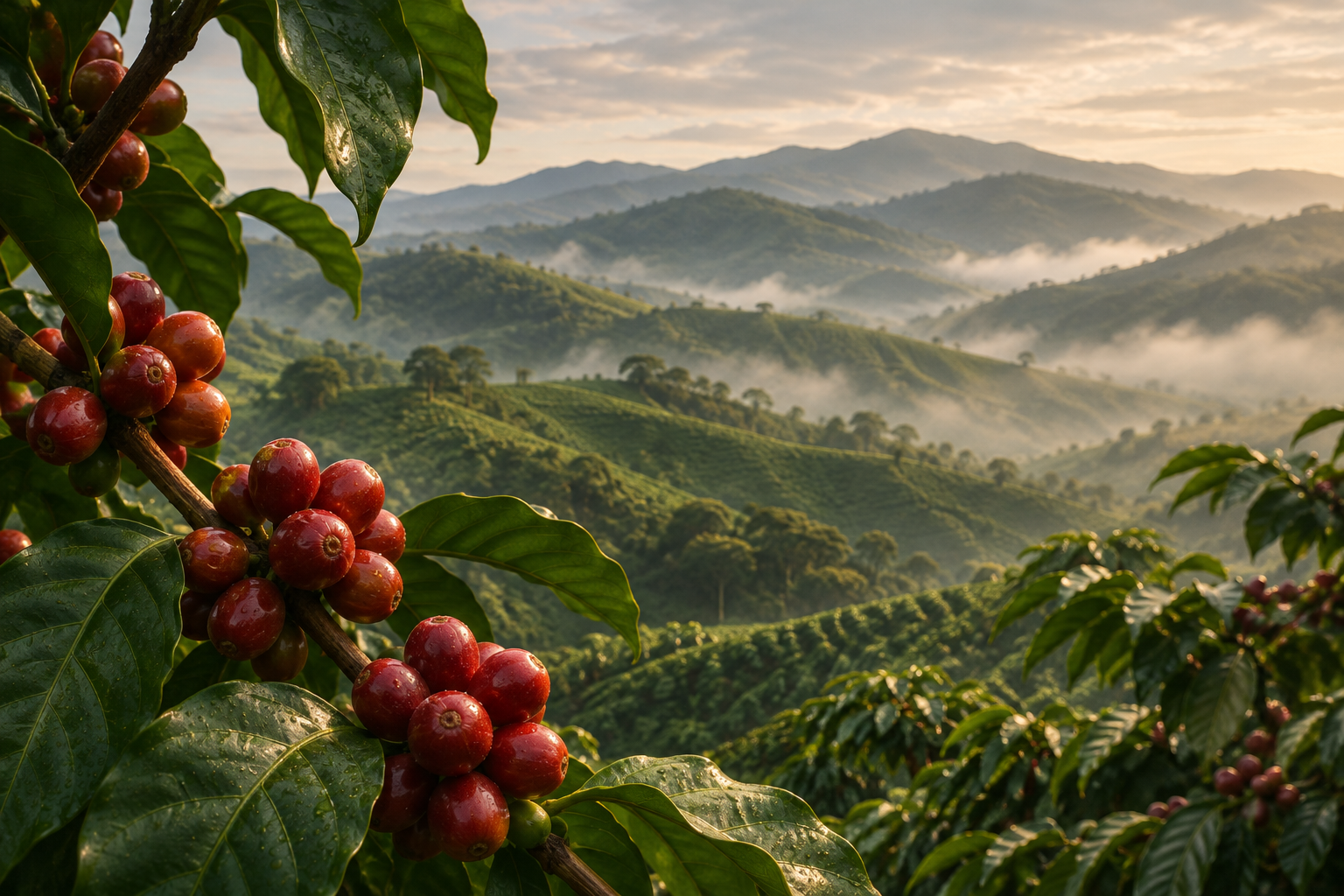
Meet La Bretaña, a farm shaped by the work of José Cadavid and generations of agricultural knowledge.
The family’s account traces its specialty coffee story to 1986, when the farm began changing its approach to coffee and food production. Planting trees and making compost on the farm became part of that journey.
Today, La Bretaña describes a mixed coffee and dairy operation, with attention to varieties, processing, and the character of its coffee in the cup.
José Cadavid continued his family’s agricultural tradition as a fourth-generation coffee grower, combining coffee production with crops and livestock to sustain his family.
The handwritten history describes a coffee-sector crisis in 2010. La Bretaña decides to reduce coffee production and expand dairy production. The family also enters the roasted coffee market to improve the profitability of its coffee.
In 2015, the fifth generation of the Cadavid family took over agricultural and livestock production. Practical experience, professional training, and a better understanding of the market guided a focus on differentiated processing and coffee varieties.
The family describes regenerative agriculture, circular sustainability practices, and processing protocols from seed through wet and dry processing and stabilization. These are producer-reported practices; this website does not present them as independently verified certifications.
The family account marks a shift toward more environmentally friendly production.
Dairy production and roasted coffee become part of the family’s response to a difficult market.
The fifth generation brings a renewed focus on processing and quality in the cup.
History adapted from La Bretaña’s handwritten account, supplied by the producer.
Distinctive qualities. A traceable story. And something in the cup worth paying attention to.
Aroma, flavor, sweetness, and texture all contribute to how a coffee is experienced. Tasting notes describe impressions, not necessarily added ingredients.
The producer, variety, growing conditions, and processing help explain a coffee’s identity. Each lot has its own story to tell.
Harvesting, sorting, drying, storage, roasting, and brewing can all preserve—or diminish—the coffee’s potential.
Processing influences flavor, but the method alone never guarantees quality.
The fruit is removed and the coffee is washed before drying. Washed coffees may show clear, well-defined flavors and lively acidity.
General processing information, not a description of a confirmed La Bretaña lot.Historically, 80 points on a 100-point cupping scale has been common industry shorthand. The Specialty Coffee Association’s current definition is broader: it considers distinctive attributes and the additional value people place on them. Its Coffee Value Assessment includes physical, descriptive, affective, and informational assessments.
No cupping score or specific tasting profile is claimed here for La Bretaña. Those details must be established for each lot.
Learn more: SCA specialty coffee definition ↗ Coffee Value Assessment ↗
From the clarity of a V60 to the rich texture of a French press, discover how your brewing method changes the cup.
Dorjes Coffee Imports COFFEE IMPORTER
Building a coffee import business that starts with understanding the origin.
La Bretaña is the first producer story featured here. The aim is simple: connect the family’s work with a clear understanding of the coffee, from its production history to the assessment of each lot.
Download the farm story and coffee guide ↗Contact Dorjes Coffee Imports: (412) 465-0567
dorjescoffee@outlook.com
Available coffee lots will be added here when confirmed.